3D laser scanning is rapidly transforming the way construction, engineering, and infrastructure projects are designed, executed, and managed. Understanding the advantages and limitations of 3D laser scanning helps professionals make informed decisions about its use. By capturing highly accurate digital representations of real-world environments, it allows teams to minimize errors, streamline workflows, and enhance decision-making.
The technology generates dense point clouds that support design validation, as-built documentation, and seamless team coordination. While it offers remarkable benefits in speed and precision, it also presents certain challenges. Understanding both its strengths and limitations is essential for making informed decisions about its practical applications.
What is 3D Laser Scanning?
3D laser scanning is an advanced measurement technology that uses laser beams to capture precise spatial data of objects and environments. It collects millions of data points to create a detailed digital representation known as a point cloud.
This data can be further processed into accurate 3D models for design, analysis, and documentation. The technology is widely used in construction, infrastructure, industrial facilities, and heritage preservation to capture real-world conditions and support BIM-based workflows and engineering decisions.
Key Advantages of 3D Laser Scanning
1. High Accuracy and Precision
3D laser scanning captures measurements with millimeter-level accuracy by using laser beams to calculate exact distances between the scanner and surfaces. This high precision reduces human error and ensures reliable data for design, fabrication, and construction. As a result, projects achieve better alignment, fewer discrepancies, and improved overall quality.
2. Speed and Efficiency
The scanner rapidly collects millions of data points in a short time, allowing large or complex sites to be documented within hours instead of days. This significantly reduces fieldwork time and minimizes disruption to ongoing operations. Faster data collection also accelerates project timelines and decision-making processes.
3. Non-Contact Measurement
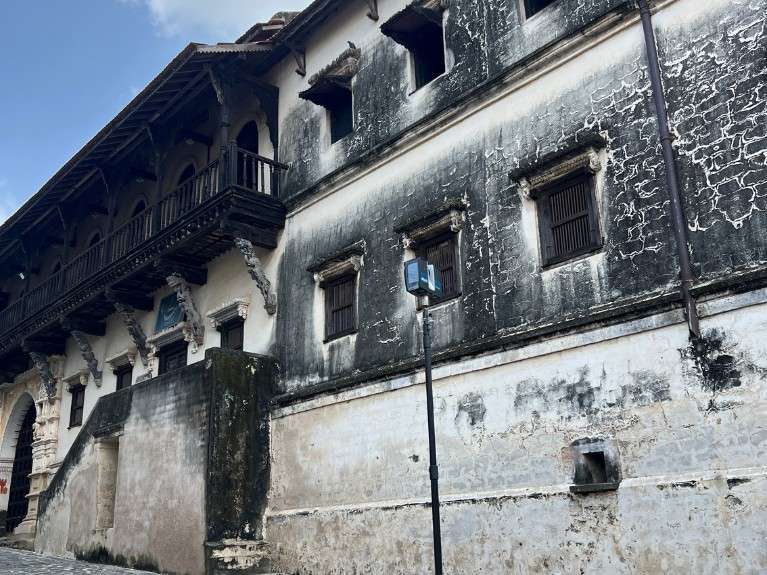
3D laser scanning captures data without physically touching the object or environment. This makes it ideal for fragile structures, heritage sites, or hazardous areas where direct contact is risky or impossible. It ensures safe data collection while preserving the condition of the scanned asset.
4. Comprehensive Data Capture
Unlike traditional methods that record selected points, laser scanning captures complete surface data in the form of dense point clouds. This means every visible detail is recorded, allowing teams to revisit the data anytime without returning to the site. It improves accuracy in analysis, modeling, and quality control.
5. Improved Visualization
The captured data can be converted into detailed 3D models and visual representations. These models provide a clear and realistic view of the site, helping stakeholders better understand existing conditions. This improves communication, reduces misunderstandings, and supports more informed decision-making.
6. Better Project Planning and Documentation
Accurate as-built data allows engineers and designers to plan with confidence. It helps identify potential clashes, design issues, or space constraints early in the process. Additionally, the data serves as reliable documentation for future maintenance, renovations, or audits.
7. Integration with Other Technologies
3D laser scanning data can be easily integrated with technologies like BIM (Building Information Modeling), CAD software, and digital twins. This enhances collaboration across teams and ensures that everyone is working with the same accurate information, improving coordination and overall project efficiency.
Limitations of 3D Laser Scanning
1. High Initial Investment
The cost of advanced laser scanners and processing software can be significant, making it less feasible for smaller firms or low-budget projects.
2. Requirement for Skilled Professionals
Processing and interpreting point cloud data demands technical expertise and specialized training, which may not always be readily available.
3. Large Data Volume
Laser scans generate massive datasets that require substantial storage capacity and high-performance computing systems for efficient processing.
4. Line-of-Sight Constraints
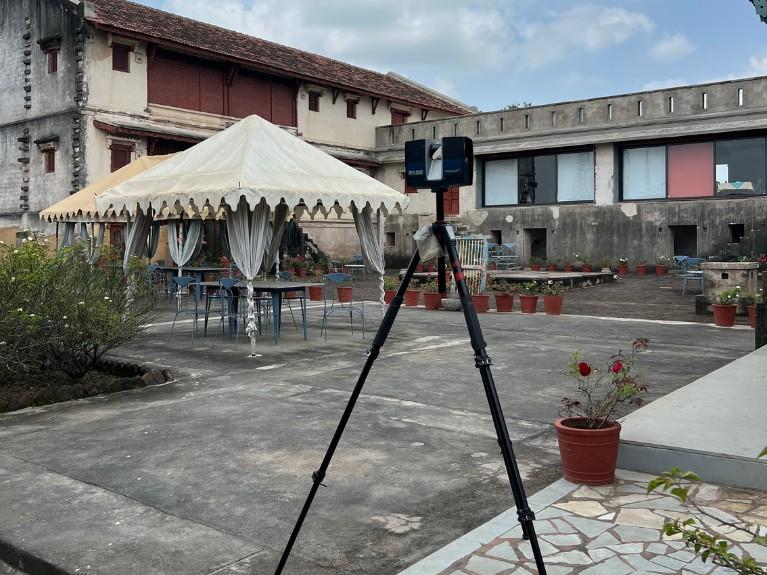
The technology relies on direct visibility, meaning obstructed areas may not be captured and require multiple scan positions.
5. Time-Intensive Data Processing
Although field data collection is quick, transforming raw scan data into usable models can be time-consuming and resource-intensive.
6. Limited Use for Small Projects
For simple or small-scale surveys, traditional methods may be more practical and cost-effective.
7. Equipment Sensitivity
Laser scanners are precision instruments that require careful handling and can be affected by environmental conditions such as dust, rain, or extreme temperatures.
When Should You Use 3D Laser Scanning?
3D laser scanning is most beneficial when projects demand high precision, detailed documentation, and efficient coordination. It is particularly suitable for large-scale construction, infrastructure development, industrial plants, renovation projects, and BIM modeling.
If your objective is to minimize design errors, improve collaboration, and create reliable as-built documentation, this technology offers significant value. It becomes especially critical when dealing with complex geometries or projects where accuracy directly impacts decision-making and outcomes.
Conclusion
3D laser scanning is a powerful and evolving technology that enhances accuracy, efficiency, and collaboration across modern construction and engineering projects. Understanding the advantages and limitations of 3D laser scanning allows businesses to apply it more strategically. While it provides clear advantages such as precise data capture and faster site surveys, it also comes with challenges like high costs and complex data processing.
The key lies in applying the technology strategically based on project needs. When used effectively, 3D laser scanning becomes an indispensable tool for improving project quality, reducing risks, and achieving better overall results.
FAQs
1. Is 3D laser scanning better than traditional surveying?
It depends on the project requirements. For complex and large-scale sites, laser scanning offers greater accuracy and speed, while traditional methods are often sufficient for smaller tasks.
2. How accurate is 3D laser scanning?
It can achieve millimeter-level accuracy, depending on the equipment used and site conditions.
3. Which industries use 3D laser scanning?
It is widely used in construction, architecture, infrastructure, manufacturing, and heritage preservation.
4. Is 3D laser scanning expensive?
While the initial investment is high, it often leads to cost savings by reducing errors, rework, and project delays.
5. Can 3D laser scanning be integrated with BIM?
Yes, it integrates seamlessly with BIM workflows, enabling accurate modeling and improved coordination.
6. How long does the scanning process take?
Data capture is typically fast and can cover large areas within hours, while processing time depends on project complexity.