Choosing the right 3D scanning service is important when you need accurate digital information from a physical object, structure or environment. The right provider can help you capture reliable data for inspection, reverse engineering, documentation, design and other engineering applications.
However, not every 3D scanning project requires the same technology, accuracy or deliverables. Before selecting a provider, you should understand your project requirements and evaluate whether the scanning approach matches your application.
1. Understand Your Project Requirements
Start by defining what you need the scanning data for.
A component being scanned for reverse engineering may require different equipment and accuracy compared with a building being documented for renovation.
Consider:
- What needs to be scanned?
- How large or complex is it?
- What accuracy is required?
- Will scanning be performed on-site?
- What will the data be used for?
- What final file format do you need?
Clear requirements make it easier for the provider to recommend a suitable scanning method.
2. Check Scanning Accuracy
Accuracy is one of the most important factors when selecting a provider.
The required accuracy depends on the application. Precision inspection and reverse engineering may require highly detailed measurements, while general documentation may have different requirements.
Ask the provider about:
- Expected measurement accuracy
- Scanner specifications
- Resolution
- Scanning distance
- Registration accuracy
- Data-processing methods
Remember that scanner specifications alone do not guarantee the final project accuracy. Scanning conditions, object surfaces, equipment setup and data processing can also affect results.
3. Choose the Right Technology
Different scanning technologies are suitable for different applications.
Depending on the project, a provider may use:
- Handheld 3D scanners
- Terrestrial laser scanners
- Mobile LiDAR
- Structured-light scanning
- Photogrammetry
- Drone-based surveying
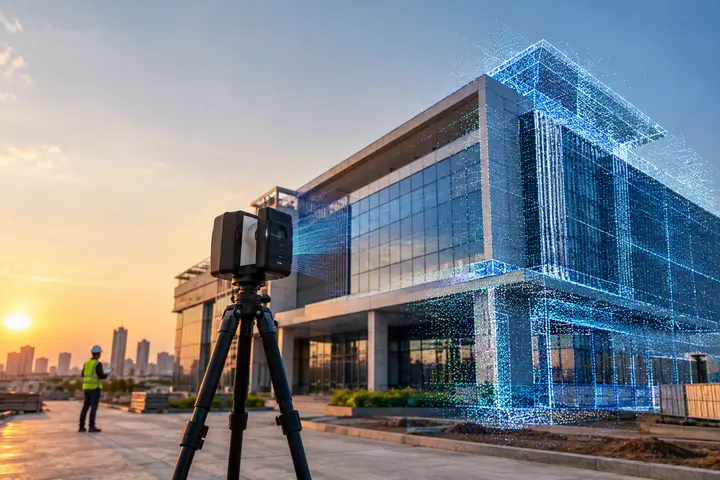
For example, handheld scanning can be useful for complex components, while terrestrial laser scanning can be suitable for buildings, industrial facilities and larger environments.
A professional provider should select the technology based on your requirements rather than using the same approach for every project.
4. Consider the Provider’s Experience
Experience matters because successful 3D scanning involves more than operating a scanner.
Look for a provider with experience in applications similar to yours. A provider familiar with manufacturing may understand inspection and reverse engineering requirements, while a provider experienced in construction may have stronger capabilities in building documentation and BIM workflows.
Review previous projects, case studies and the types of industries the provider has worked with.
5. Check the Data Processing Capabilities
The scanning process produces raw measurement data, but this data often needs additional processing before it becomes useful.
Depending on your project, processing may include:
- Point-cloud registration
- Data cleaning
- Mesh generation
- CAD modeling
- Surface reconstruction
- Dimensional inspection
- BIM modeling
Therefore, don’t only ask whether a company can perform the scanning. Find out whether it can also provide the data processing or modeling required for your project.
6. Confirm the Final Deliverables
Before starting the project, confirm exactly what you will receive.
Common deliverables include:
- Point clouds
- 3D meshes
- CAD models
- BIM models
- 2D drawings
- Inspection reports
File formats can vary depending on the project and software workflow. Discuss your required format with the provider before scanning begins to avoid unnecessary conversion work later.
7. Ask About On-Site Scanning
Many objects and environments cannot be transported to a scanning facility.
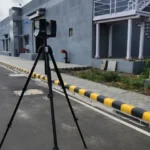
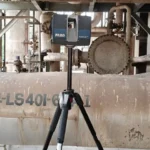
Large machinery, industrial plants, buildings, vessels and installed components may need to be scanned at their existing location.
If your project requires on-site work, check whether the provider has suitable portable equipment and experience working in operational or restricted environments.
8. Compare Quality, Timeline and Cost
Price is important, but it should not be the only factor when comparing providers.
The cost of a 3D scanning project can depend on:
- Project size
- Required accuracy
- Scanning technology
- Site accessibility
- Number of scanning locations
- Data-processing requirements
- CAD or BIM modeling
- Required turnaround time
Compare what is included in each quotation instead of looking only at the final price. A lower-cost service may not include the processing or deliverables your project actually needs.
Why Choose Fibrox 3D?
Fibrox 3D provides reality-capture and digital engineering solutions for projects requiring accurate three-dimensional information.
Its capabilities include 3D laser scanning, mobile LiDAR, drone surveying, photogrammetry, BIM modeling, reverse engineering and 3D mesh modeling.
Fibrox 3D approaches each project according to its specific requirements, helping determine the appropriate technology, data capture method and final deliverables.
From industrial components and machinery to buildings, plants and complex environments, the captured information can be processed into useful digital data for engineering, inspection, design and documentation workflows.
What Industries Use 3D Scanning?
3D scanning is used across many industries and applications, including:
- Manufacturing
- Automotive
- Aerospace
- Construction
- Architecture
- Industrial plants
- Marine
- Heritage documentation
- Engineering
- Product development
The specific scanning method and deliverables depend on the requirements of each project.
Conclusion
Choosing a 3D scanning service should begin with your project requirements rather than simply comparing prices. Consider the required accuracy, scanning technology, object or site size, provider experience, data-processing capabilities and final deliverables.
A suitable provider should be able to explain which technology fits your application and how the captured data will be transformed into a useful digital output.
With its range of reality-capture and digital engineering capabilities, Fibrox 3D supports projects requiring detailed 3D data for inspection, reverse engineering, modeling, documentation and other engineering applications.
FAQs
1. What should I consider when choosing a 3D scanning service?
Consider accuracy, scanning technology, project size, site conditions, provider experience, data processing, turnaround time and required deliverables.
2. How do I choose the right 3D scanning technology?
The right technology depends on the object’s size, geometry, surface, accessibility, required accuracy and intended use of the captured data.
3. Can 3D scanning be performed on-site?
Yes. Portable scanning equipment can be used to capture large machinery, buildings, industrial facilities and other assets at their existing locations.
4. What deliverables can I receive after scanning?
Depending on the project, deliverables can include point clouds, 3D meshes, CAD models, BIM models, drawings and inspection data.
5. Can Fibrox 3D process scanned data?
Yes. Depending on project requirements, Fibrox 3D can support point-cloud processing, 3D modeling, BIM, reverse engineering and related digital engineering workflows.
Also Read: What is a Topographical Survey?