
3D Scanning for Tank calibration
3D Laser Scanning
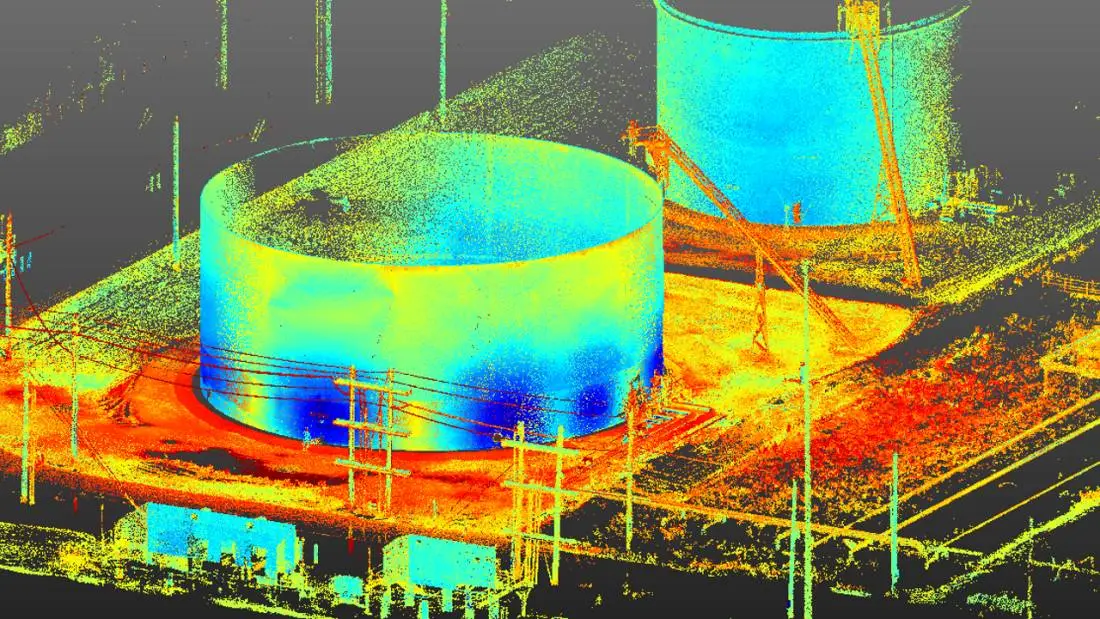
3D Laser Scan Automatic Tank Calibration
Tank calibration services help you measure and verify quantities and volume in large petroleum, fuel and chemical storage tanks. Calibration is the method by which the exact volume of your tank is calculated in line with specified measurement standards. This process is key to obtaining accurate measurements of quantity and keeping good contractual relationships with your clients, governing bodies and insurance companies.
Dacon can ensure you the highest degree of measurement accuracy in compliance with international standards using the latest tank calibration technology, tools and expertise.
Tank Calibration is completed to API standards, ISO standards or client specified standard.
Types of Tanks We Calibrate :
- Vertical Tanks
- Horizontal Tanks
- Sphere Tanks
- Fixed Roof Tanks
- Floating Roof Tanks
- Domed Roof Tanks
- Conical Roof Tanks
FAQs
3D scanning captures precise tank dimensions, ensuring accurate volume measurement and reducing errors in calibration calculations.
Yes, 3D scans detect dents, deformations, and surface inconsistencies, improving calibration reliability and maintenance planning.
3D scanning is much faster, capturing millions of points in hours instead of days, reducing downtime and operational disruption.
Yes, scanning can be done remotely without entering hazardous tanks, ensuring safety while gathering accurate internal measurements.
Large storage, chemical, fuel, and water tanks can all be scanned, regardless of shape or internal structure complexity.
Accurate digital records from 3D scans help meet regulatory standards for capacity, safety, and maintenance audits efficiently.
Yes, scan data can feed directly into software for calibration, inventory management, and operational monitoring.
Absolutely. High-precision scanning eliminates human measurement errors, improving calibration consistency and safety.
Frequency depends on usage and regulations, but periodic scans ensure accurate monitoring and timely maintenance.
Yes, detailed scans reveal surface degradation, rust, or internal anomalies, aiding preventive maintenance and inspection.