
- Rapid Data Acquisition:A 3D laser scanner is capable of capturing millions of data points in one second, making it possible to have an extremely detailed digital depiction of the pipeline. This enables one to get quick scans of even the most complicated pipe systems, saving a lot of time on-site.
- Reduced Downtime:Due to the speed at which inspections are done, the pipelines are not out of service as much, which reduces downtimes. This particularly comes in handy in the high-stakes business sectors such as oil and gas, where efficiency is of paramount importance.
- Faster Analysis:The 3D pipe scanned data can also be reviewed immediately by the engineers and thus be analysed instantly. This removes the delays of dispatching physical samples out of the premises, accelerating the decision-making process and possibly saving expensive delays in the operation process.
- Precise Defect Detection:A 3d laser scanner can even detect a sub-millimeter defect or crack. This feature makes it easy for engineers to identify possible problems at the very beginning, which minimizes the threat of failure or unforeseen malfunctions.
- Consistent and Reliable Results:This is in contrast to manual inspections, where the quality of the work may depend on the expertise of the technician, whereas in 3D pipe scanning, the results are repeatable and consistent. This regularity assists in the development of a good record of the health of the pipeline that can be used by the engineers to make plans.
- Detailed 3D Modeling:A major benefit of 3D laser scanning is the possibility to generate a point cloud or 3D model with a great amount of detail. It is a digital twin of the pipeline that can be stored, reviewed, and referred to at any time, and thus it will serve as a very useful tool in continued maintenance and inspections.
- Non-Contact Inspection:The process of scanning pipes by technicians is possible at a safe distance and eliminates physical access to dangerous or inaccessible areas. This eliminates the hazards in a narrow area, scaffold, and other hazardous working environments.
- Virtual Walkthroughs:After data capturing, engineers and other technicians will be able to traverse the virtual 3D model of the pipeline. This enables a lot of planning and risk evaluation prior to any physical activity. Virtual walkthroughs raise the level of safety awareness and assist in the identification of possible hazards in the initial stages.
- Traceable, Automated Reporting:The 3D pipe scanning procedure will produce automated reports that are standards-compliant. The data that is essential in these reports includes burst pressure, corrosion levels, and defect progression. This simplifies the documentation process and makes sure that it is done in accordance with the industry standards.
- Long-Term Integrity Management:Repeated scans on the 3D pipes over time form a historical database of the pipes. This enables the engineers to monitor degradation, future failure, and strategize maintenance plans way ahead of time. The long-term integrity management will ensure that pipelines will last longer and minimise the chances of making expensive repairs or replacements.
- Enhanced Visualization:The 3D laser scanner on pipe inspections has an interactive visual image of the pipe condition, unlike the old 2D reports, which can be seen in a solid, two-dimensional format. The model can be rotated, zoomed in, and manipulated by engineers to get a better insight into the health of the pipe.
- As-Built Documentation:A major advantage of the 3D laser scanning is that it allows the creation of precise as-built documentation. When there are no original blueprints or they are outdated, the 3D laser scan can give accurate information that can be utilized by the engineers to plan how to expand or even retrofit them in the future.
- Retrofit and Expansion Planning:Using the right 3D models, engineers will be able to ensure that the new systems and equipment will fit in the existing infrastructure with ease. This will remove expensive mistakes that will occur due to errors in measurements, which will save time and end up saving money.
- Clash Detection:The engineers can superimpose the new designs on the scanned model of the existing pipeline before the commencement of a retrofit or expansion project. This aids in establishing any possible clashes and conflicts at an early stage, avoiding project delays and project surprises.
- Reduced Manual Labor Costs:The process of manual checks is a tedious task that may involve several technicians. Changing to 3D pipe scanning enables you to save on the amount of personnel on the site to perform the inspection, and thus, saving a large share of labor costs.
- Prevention of Expensive Failures:The accuracy and the level of detail being given by the 3D laser scanners enable an engineer to identify problems at an early stage and in most instances, before they grow to be significant problems. This proactive pipeline maintenance strategy can save the expensive repair or breakdown of the systems.
A pipeline is a key operation in the modern-day industrial world within the oil and gas, power, and water management sectors. Their safety and efficiency must be ensured with a fast, accurate, and reliable inspection.
Conventional ways are sometimes not enough- these are time-consuming, labor-consuming, and can overlook defects that are not evident. This is where the 3D Laser Scanner on Pipe Inspections changes the situation.
With 3d pipe scanning technology, engineers can take 3D data easily, detect problems early, minimize downtimes, and enhance safety.
What is a 3D Laser Scanner on Pipe Inspections?
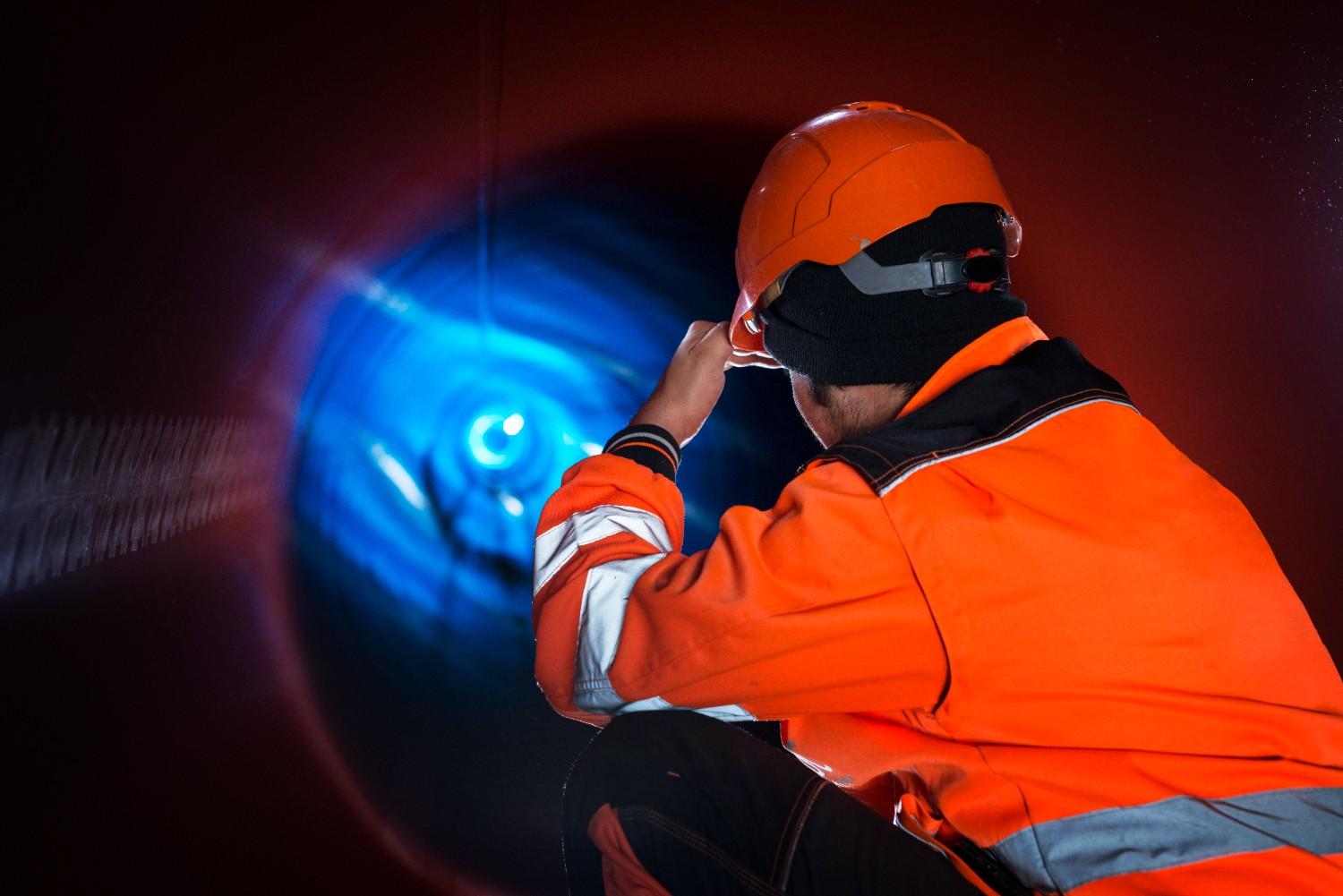
A 3D laser scanner for pipeline inspections is a high-tech tool that is employed in scanning the actual dimensions and features of a pipeline with the help of laser beams.
The scanner produces a point cloud, which is a digital representation of the surface of the pipe and the environment it is located in, enabling the engineers to study its condition remotely.
The whole pipe scanning takes very little time and is highly accurate with 3D pipe scanning, and the data gives a clear picture of the current status of the pipeline. This is becoming quicker, less hazardous, and more precise than the conventional method of inspection.
Why Choose a 3D Laser Scanner for Pipe Inspections?
1. Automated Geometry Creation
In cases of industrial check-ups, time is money. Conventional ways of inspecting the pipes may be laborious since they involve manual measurements as well as long physical data collection processes on the ground. On the contrary, a 3D laser scanner for pipe inspection has several speed benefits.
2. Unmatched Accuracy and Detail
In the process of inspecting a pipeline, it will need precision. One bug that gets neglected may cause serious safety and financial problems. The laser scanner on pipe checks is 3D, which also gives it a high level of accuracy, and therefore, it is effective in detecting the slightest of details.
3. Improved Safety for Technicians
One of the most considerable concerns in the pipeline inspections is safety, particularly in the hazardous environment. The inspection through 3D laser scanners on the pipeline is a non-contact form of inspection that greatly improves safety.
4. Better Data Management and Analysis
All the inspection data in 3D laser scanning is kept digitally, and hence is easier to manage and analyze over time. This is the game-changer in long-term asset management through the digital transformation of the pipeline inspections.
5. Simplified Engineering and Planning
Precise and efficient 3D pipe scanning makes a lot of engineering and planning of the pipeline systems easier.
6. Cost Savings and ROI
Although the cost of the initial investment in 3D laser scanning technology might be considered large, it is indisputable that the savings and the ROI are tremendous in the long run.
Conclusion
3D Laser Scanner on Pipe Inspections has incomparable benefits as far as speed, accuracy, safety, and cost saving are concerned. This technology is changing the way pipeline inspection is conducted.
The use of high-tech 3D pipe scanning has not yet reached its peak, as more industries can see the advantages of this technique. A 3D laser scanner on pipe inspections is an investment that will reap good results in the long run, whether you need to enhance the accuracy of your inspections, reduce downtime, or improve the safety.
Read More: Large-Format Scanning Optimizes Processes Across Diverse Industries