
- Retrofits and Upgrades:Precise scans avoid misalignments during overhauls.
- Maintenance Planning:Highly detailed models ensure accurate planning for repairs and equipment replacement.
- Safety Analyzation:Any perilous location can be mapped without risk endangering the workers.
- Clash Detection:The conflicting systems are identified and clarified even beforehand, and it eliminates the need of rework and its costs.
In this construction environment of dynamic changes, precision, time-sensitivity, and collaboration are not optional anymore; . it is a mandatory elements.
The old-time surveying methods, tried and as accurate as they might be, can still fall behind the pace of present-day projects and especially in unfavorable conditions. That's where Convenience in Construction with 3D Laser Scanning is redefining the norms.
3D Laser Scanning uses the accuracy of a laser to record a high level of real-time and high-resolution information, and therefore, it means that the level of precision and ease of efficiency has scored a first in history.
What is 3D Laser Scanning?
This less-understood, but highly advanced survey technology is the use of laser beams to measure millions of areas per second in a contactless, high-velocity surveying option called 3D Laser Scanning.
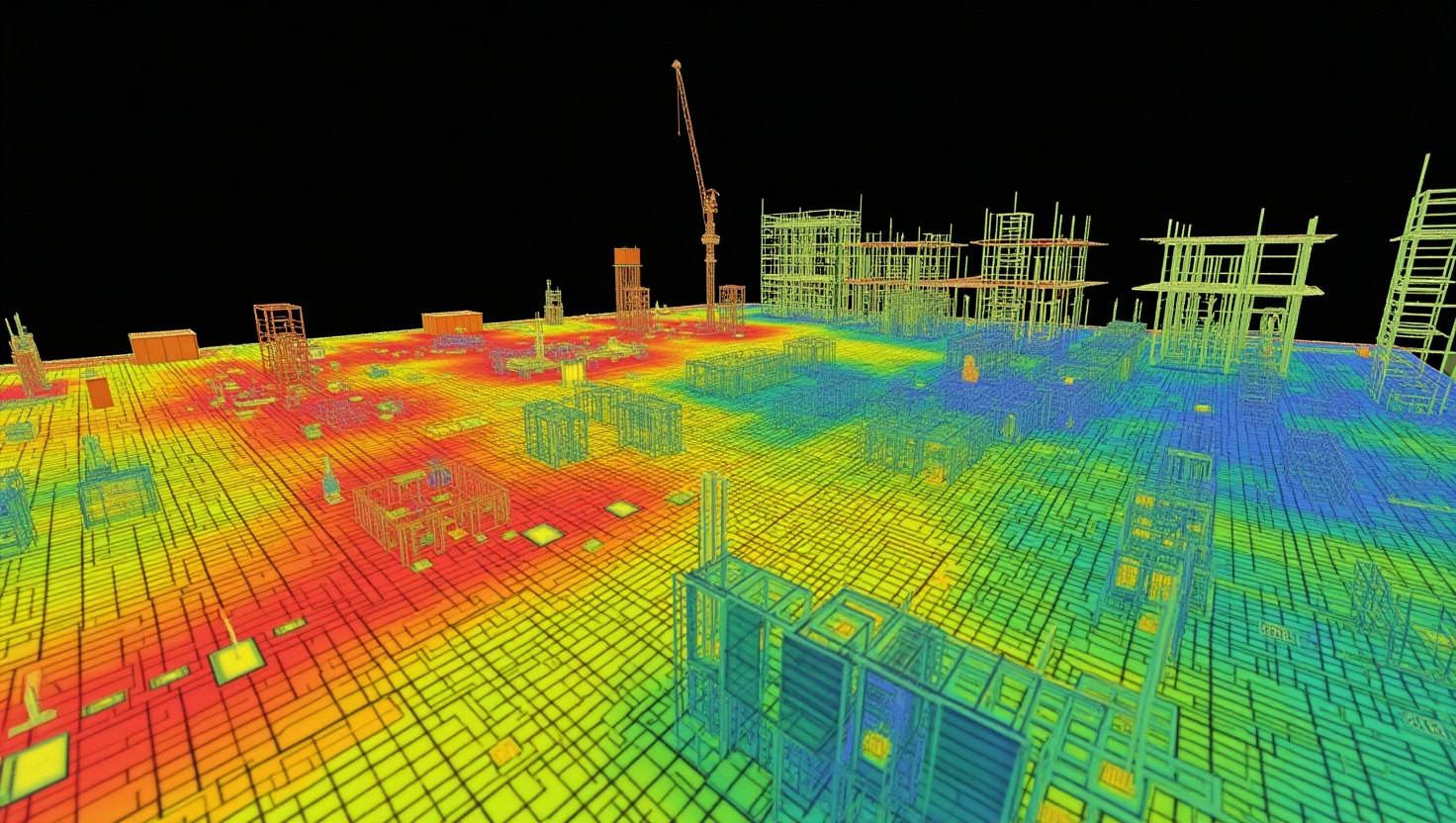
These measurements are used to create a "point cloud," which is then processed into a very precise 3D digital model of the scanned scene.
Unlike conventional tape-measure, level, or hand-held photogrammetry surveys, laser scanning sees it all, precisely and with speed.
The payoff? Little human error, high spatial context, and a digital workspace that refines every phase of a building project.
Why Convenience in Construction with 3D Laser Scanning Matters?
Today's construction projects are larger and more complex than ever, subject to more stringent schedules. Convenience in Construction with 3d laser scanning technology is its capacity to minimize man hours, avoid expensive rework, and facilitate collaboration among project teams. It might be a new construction or a renovation within an operational industrial plant, laser scanning eliminates complexity and enhances predictability.
Key Benefits of 3D Laser Scanning
1. High Accuracy and Speed
Laser scanning takes measurements with millimeter accuracy. One scanning session offers the ability to document an entire building in hours, instead of days or weeks.
This accelerates a project schedule without compromising quality, a feat that is essential in a fast-track project.
2. Reduced Errors and Rework
Rework accounts for a large percentage of construction costs. Design intent and actual site conditions are identified sooner in the process with the laser scanning. Accurate as-built models prevent mis-alignment and minimize change orders to enable projects to stay on schedule and within budget.
3. Enhanced Visualization
The 3D-generated models give a more than life experience of the site and stakeholders can then understand the spatial relationships in a more practical manner.
Architects, engineers, and builders have the ability to navigate through the project in the world of cyberspace that promotes more precise planning, safety, and communication with the clients.
4. Improved Collaboration
Field technicians, project managers and any other party in between are able to share the same information in real-time.
This facilitates harmonizing, an increase in transparency, and a reduction in failure of communication. Remote teams do not have to be onsite by leveraging the digital twin technology to work remotely.
5. Comprehensive Documentation
Every time it is scanned it is stored in a digital form of what is already there. Such records are invaluable in performing maintenance, regulation, updating, or an increase in the future.
Applications in Industrial Plants
Industrial plants are typically convoluted settings with constricted areas, complicated equipment, and safety issues. 3d laser scanning of industrial plants overcomes these issues with ease:
With the addition of 3D Laser Scanning to the construction and operations of industrial plants, operators experience safer, faster and less costly outcomes of projects.
Specialized Focus: 3D Laser Scanning for Industrial Plants
When 3d laser scanning for industrial plants, the advantages are even greater. Industrial environments are often cramped with equipment, pipes hanging above head and safety hazards. Old methods of measurement can be unsafe, and too slow.
1. Retrofits and Upgrades
Facilities often require capacity increases or system upgrades while operations continue. 3d laser scanning for industrial plants records actual-time equipment arrangement, piping, and electrical systems. Engineers are capable of developing retrofits that fit in easily into the existing layouts without disrupting the production.
2. Safety and Hazard Mitigation
By digitally capturing images of inaccessible or high-risk areas, scanning minimizes the number of personnel who must enter at-risk areas. This is risk-reducing without impairing data integrity.
3. Clash Detection and Interference Checking
Spatial limitations are a hallmark of industrial plants. Scans allow clashes and overlaps, e.g., pipes running through beams to be detected prior to becoming on-site issues.
4. Maintenance and Asset Management
Laser scanning establishes a digital duplicate of the facility, supporting predictive maintenance and inventory monitoring. Asset managers can find precise measurements and locations of parts, enhancing planning for equipment replacement or repairs.
Future of Construction with 3D Laser Scanning
The smart building of the future is digitalised, and Convenience in Construction with 3D Laser Scanning is reaching the first place.
As more AI, BIM (Building Information Modeling) and cloud-based collaboration platforms are developed, 3D laser scanning will play an even greater role in construction processes.
New technology like mobile scanning devices and drones are achieving high-accuracy 3D capture in typically inaccessible spaces like industrial plants, city infrastructure and the documentation of at-risk heritage buildings, expanding the boundaries of large and multi-dimensional projects.
Conclusions
It is the time of digital construction, and Convenience in Construction with 3D Laser Scanning is the leading edge of this stage. Laser scanning has a positive effect in all the stages of the construction life cycle starting with preliminary site survey to the end of acquisition of final facility handovers.
The advantage is even bigger with industrial facilities. 3d laser scanning of industrial plants allows committing projects safely, efficiently and technologically accurate in carrying out new installations, retrofits or routine maintenance.
By allocating funds in such a technology, construction teams are certain to gain an unbelievable advantage.
The level of the workflow increases, the number of erroneous actions is decreased, the collaboration becomes more effective, and the outcomes become better. Essentially laser scanning is not a tool, but a revolution, changing the way we build.
Read More: What Can 3D Scanning Services Do For Your Business?