
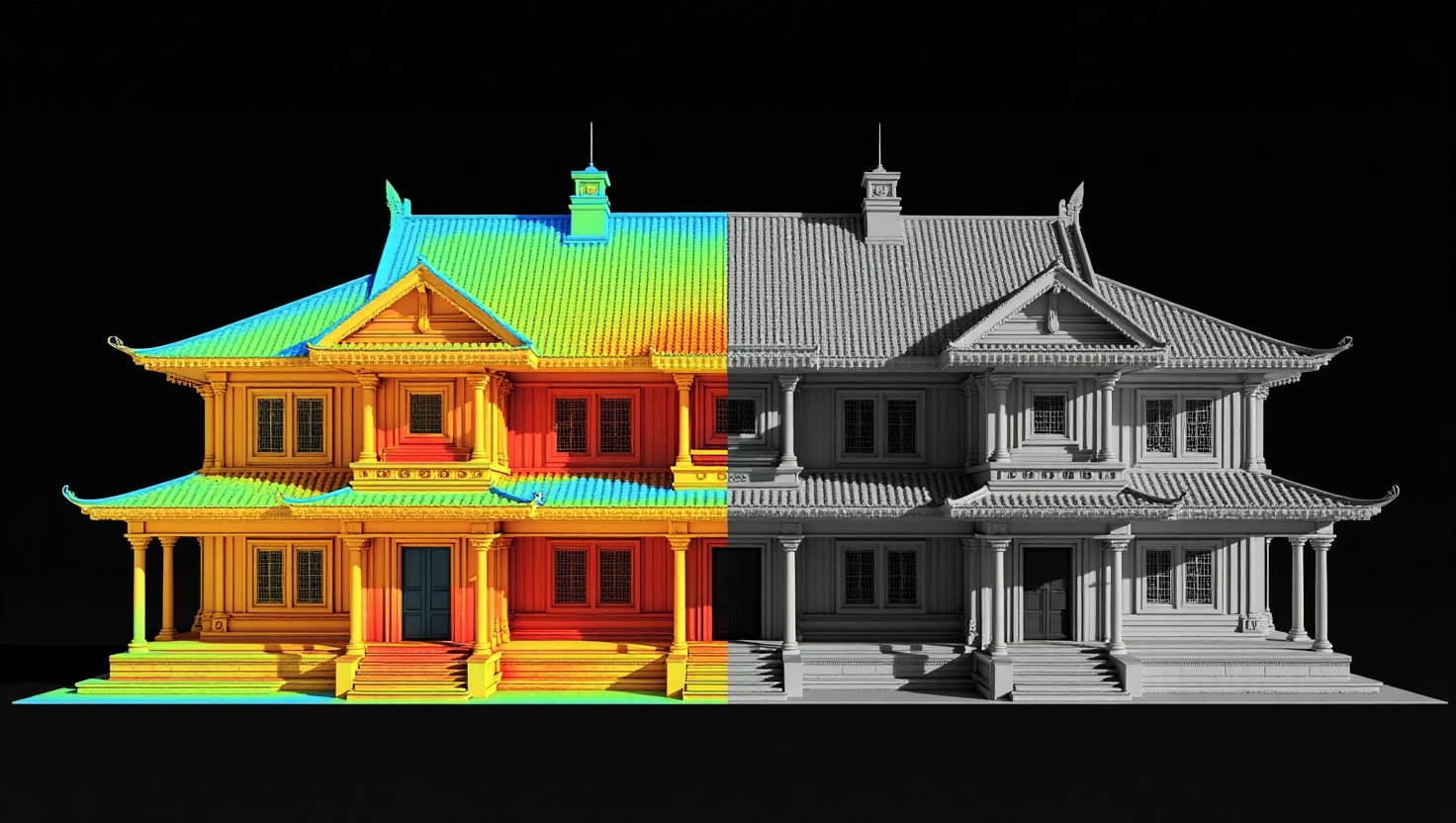
- 1. Capturing high-quality Data:Captures information as detailed and accurate as possible.
- 2. Not Contact and Non-Invasive:Does not damage sensitive areas as a result of handling.
- 3. Time Savings:Saves a few weeks of manual labour in hours or days.
- 4. Digital Archives:It stores perennial records that can be accessed later in the future.
- 5. Favors Restoration:Provides the right foundation for restoration projects.
- 6. Virtual Tourism & Education:Enables Global immersive experiences.
- 7. Archaeological Research:Helps in researching the method of construction and design of the site.
- Monument Preservation:Build permanent digital records of such structures as the Taj Mahal and Notre Dame.
- Museum Collections:Scanning Museum artifacts, sculptures and manuscripts to safely preserve it and produce replicas.
- Disaster Management:Taking action in the form of recovery blueprints following routes of earthquake, flames or any other calamities.
- 3D Printing New Possibilities:Using 3D printing to create new products, original art, and more.
- Structural Scan:Detection of crack or erosion on clean your structural scans to aid in planning of restoration.
- Education & Public Engagement:Engaging AR/VR to make cultural history more approachable to everyone around the world.
- Know-how:Expert workers are able to approach sensitive facilities and make their scanning practices fit the settings.
- High Tech:Heritage scanning firms use top quality, high-end scanners that have a wide resolution and range.
- Data Management:It does not only supply raw information, but modelled data, CAD and BIM-friendly data that can be used consistently into the future.
- Cost-Efficiency:The initial cost of using the technology may be high but due to speed, precision, and cost-saving in the long run, it is a cost-effective project dealing with heritage conservation.
Heritage sites are vivid chronicles of our past; however, they are in continuous danger of disasters and urbanization, to say nothing of their exposure to the passage of time. They should be preserved through the use of sophisticated techniques that cannot be done by means of photos or sketches.
This is where 3D laser scanning is taking effect. By taking products down to the specifics, it is changing how we document, examine, and preserve cultural goods.
In this blog, we will learn How is 3D Laser Scanning Helping Effective Heritage documentation and why heritage scanning services have become important elements of heritage conservation in the world today.
The Need for Accurate Heritage Documentation
Conventional documentation procedures do not always deliver the best results- manual measurements are slow and prone to error, and photographic records only provide a superficial understanding of the structure. Handling delicate structures is riskier and can result in additional damage.
Detailed 3-D models can easily be created without harm to heritage scanning services. The models re-create exact geometry, carvings and textures. This would help in preserving cultural treasures in a digital form. As, this would help in future research and for teaching future generations.
What is 3D Laser Scanning?
Laser scanning involves laser lights that are used to detail objects or sites at high-resolution. In a few seconds, millions of points are taken in order to create a digital 3D model that perfectly reproduces carvings, cracks, and textures.
In combination with photogrammetry, these reconstructions may even appear life-like, ideal to use as research, restoration, or guides in the form of virtual tours.
How is 3D Laser Scanning Helping Effective Heritage Documentation?
The answer to the question, How is 3D laser scanning helping effective heritage documentation? is having multiple answers. The ways this technology means or transforms heritage preservation are highlighted below/
Applications of Heritage Scanning Services
Professional heritage scanning services have become popular among the governments, museums, architectural firms and the research institutions. Some of the applications the key applications include:
Advantages of Heritage Scanning Services
Selecting customized heritage scanning services has a number of benefits:
Case Studies: How 3D Laser Scanning is Making a Difference
1. Notre Dame Cathedral, Paris
Following the recent catastrophic fire in 2019, 3D laser scans of Notre Dame that were already prepared before the incident were of great value in the reconstruction planning. The scans were accurate of the geometry of the structure giving the architects an ability to rebuild it accurately.
2. Ajanta and Ellora Caves, India
To preserve digital scanning of the carvings and cave structures has been used. 3D Scans make it easier to study These images enable UNESCO world researchers to investigate it without disturbing it physically.
3. Machu Picchu, Peru
Observation using scanning technology has been applied in stabilizing the structural status of this iconic place, which has enabled the authorities to conceive sustainable tourism and guard against destroying the monument.
Challenges and Future Prospects
Although 3D laser scanning is an advantageous option, there are certain difficulties, including high equipment price, skilled operator, large data files size to manage. Accuracy can also be influenced by environmental factors whether by rain or direct sunlight.
The future has brightened up. Combination of technologies (drones, AI, scanners) is making the process of capturing data quicker. HBIM (Historic Building Information Modeling) allows smarter management of heritage sites and virtual spaces enabling greater access to cultural sites by the general public.
Conclusion
So, how is 3d laser scanning technology Helping Effective Heritage? Giving a precise, non-invasive, and durable digital copy, it enables monuments and artifacts to be preserved, examined, and shared across the world.
Although the high cost of such services is one of the issues facing heritage scanning services, they are significant advantages to scanning services, and reason the services are invaluable in preserving the past to be accessed by future generations.
Read More: Unlocking the Convenience in Construction with 3D Laser Scanning