
- Dimensional analysis
- Wear and deformation monitoring
- Reverse engineering for repair or replacement
- CFD (Computational Fluid Dynamics) analysis
- Maintenance planning and advice for retrofitting
- Erosion and corrosion due to high water velocity and impurities.
- Sediment being deposited that changes the way water flows.
- Structural deformation from pressure fluctuations.
- Cracks or misalignments in welded areas.
- Engineers are to compare the scanned model to the original design drawings.
- The structural deformations, misalignments, or erosion zones are identified.
- Reports with visual evidence are derived to support future maintenance planning.
- Precision and Detail:Pre-accurately covers the complex pipes and features of suction tubes with high precision, as well as contours, fittings and passages within.
- Speed and Time Saving:Offers faster measurements and inspections than traditional methods.
- Digital Permanent Records:A permanent digital record of the condition and size of the pipe for future reference and maintenance decisions.
- Better Fixes:Allows better fixes as replicas of the decayed parts or custom solutions due to high-quality reverse engineering.
- Cost Saving:Predictive maintenance lowers the cost of repairing due to the lack of unexpected breakdown using predictive maintenance.
- Maintenance Planning:Engineers can see early signs of erosion or deformation, then schedule maintenance on time.
- Retrofitting Projects:Properly modeled pipes give design data to retrofit in the upgrading of an older hydropower plant without guesswork.
- Performance Investigation:3D models may serve as an input in computational fluid dynamics (CFD) analysis, which can be used to investigate opportunities to optimize flow patterns and energy-recovery.
- Documentation:The digital 3D scans will result in accurate as-builts which will be usable in compliance or reference.
- Failure Analysis:Having the scanned location available assists in understanding the causes and prevention of incidents or failures.
- BIM Connection:Creates accurate 3D models for engineers to visualize and plan upgrades and expansions.
- Digital Twin:A real-time digital twin or replica of the suction pipe, where information could be captured in real-time, together with predictive analytics.
- Confined spaces:Suction pipes are narrow and challenging to access
- Water and humidity:High liquid content may affect the scan
- Data complexity:There is a lot of information to analyze. Software and operators need to be very sophisticated to analyze millions of data points.
- Initial investment:Good quality scanners and software have high initial costs.
- Robotic scanning in remote areas without the use of a human operator or other vehicle.
- A digital twin of a pipe in operation that can provide predictive maintenance.
- AI-based automated defect identification and characterization for improved decision-making and reduced human effort.
Water power plants depend on suction pipelines to regulate and prevent excessive water from flowing through turbines, due to damage, wear, or misalignment, which will degrade system efficiency and increase maintenance costs.
Now, 3D Scanning Of A Suction Pipe offers a smarter approach. By 3d pipe scanning, engineers obtain an accurate digital model of the pipe's geometry and surface conditions without taking any equipment apart.
In this guide, we will talk about how 3D Scanning of a Suction Pipe is processed, its applications, and benefits in hydropower projects.
What is 3D Scanning of a Suction Pipe?
3D Scanning a Suction Pipe includes advanced scanning technologies such as LiDAR (Light Detection and Ranging), laser scanning, or a structured-light scanner to digitally capture the exact geometry of the suction pipe. This process produces a highly accurate 3D point cloud model of the real suction pipe with sub-millimeter accuracy.
Multi-faceted uses for the digital model include:
3D pipe scanning has an advantage over traditional manual measurements by providing more extensive data in a fraction of the time and with less downtime in a hydropower facility.
Understanding the Role of Suction Pipes in Hydropower Plants
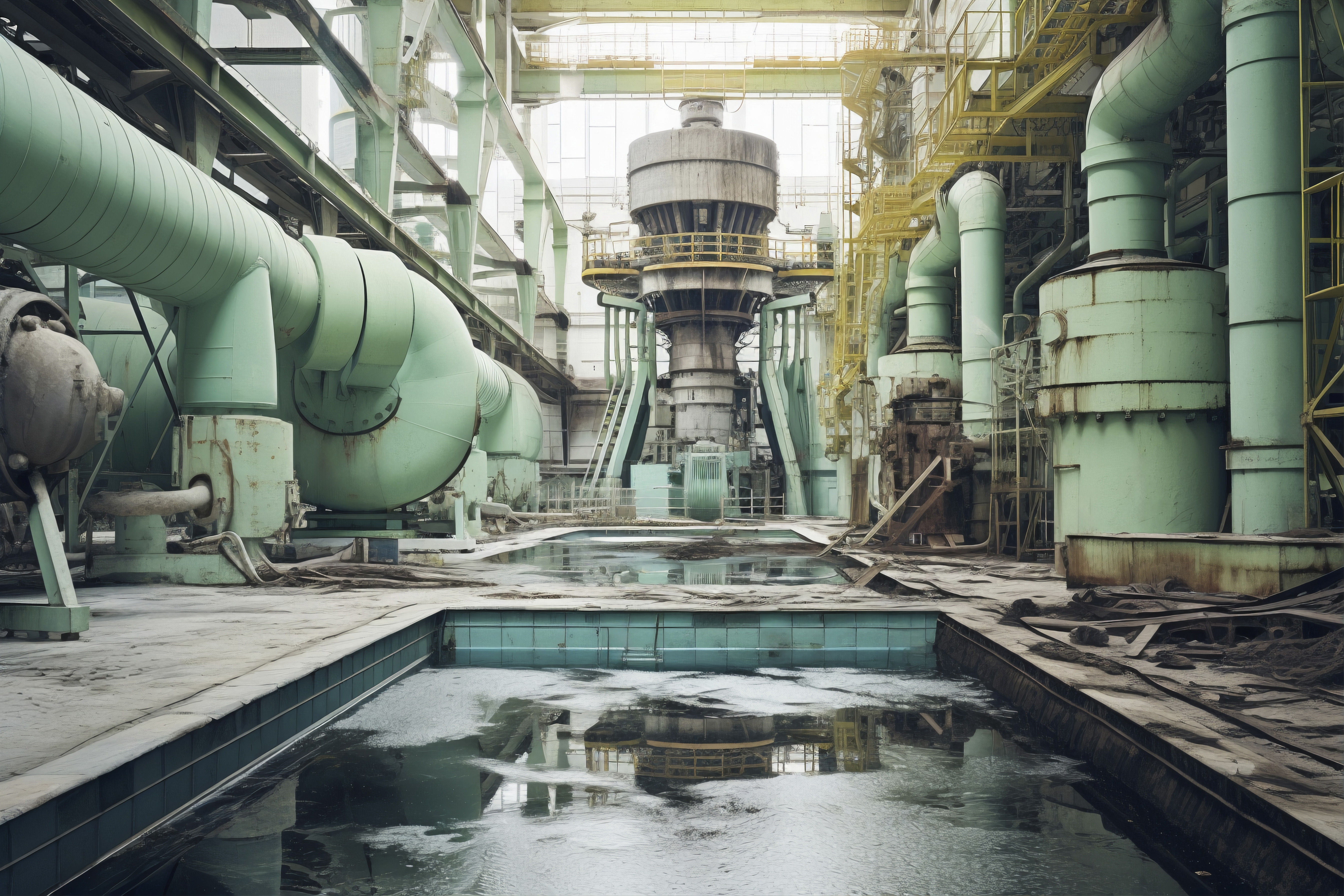
A suction pipe, also called a draft tube or suction conduit, is an important part of a hydropower plant. Suction pipes help in connecting outer of turbine with the downstream water channel. This would help in recovering kinetic energy and smooth discharge of water. Thus, the turbining system efficiency is affected by the suction pipe's condition and geometry.
Suction pipes can deteriorate over time in many ways, such as:
To have operational performance, a detailed inspection and geometric data are needed. Enter 3D pipe scanning technology, which can greatly benefit our activities!
Process of 3D Scanning a Suction Pipe
The workflow for 3D Scanning Of A Suction Pipe is generally as follows:
1. Preparation:
The client provides existing info on the suction pipe and the plant environment, including images of the material.
2. Equipment selection:
The appropriate 3D scanner was chosen based on the available info as well.
3. Safety and accessibility:
If the area being scanned is difficult to access, for instance, the inside of a suction pipe, personnel may use an overhead crane and an industrial climbing harness to ensure safety and lower them into the pipe.
Another person would assist with the operation of the crane and receive feedback when the scanning work package was accepted.
4. Scanning:
The surface of the pipe is cleaned and the targets applied (if required) before scanning.
The 3d scanner india will now take the 3D surface 'measurement' for the suction pipe, reporting by acquiring the complexity of the geometry and wear/damage of the suction pipe. This can happen very quickly; 30 minutes maybe.
5. 3D Model:
From the processed point cloud, engineers will produce the 3D CAD model and/or mesh model. This digital twin allows for accurate measurements, analysis and can link in with existing or new engineering software packages.
6. Data processing and analysis:
The captured 3D Scanning Of A Suction Pipe data (point cloud) is then processed using software such as Geomagic Control X and Geomagic Design X, allowing:
Benefits of 3D Pipe Scanning in Hydropower Plants
Applications of 3D Pipe Scanning in Hydropower Plants
3D pipe scanning has applications in areas beyond suction pipe inspections. The primary uses are:
Integration with Digital Twins and BIM
One of the most impactful outputs of 3D Scanning a Suction Pipe is its connection to Building Information Modeling (BIM) and digital twin technologies.
Incorporation of these technologies enhances hydropower infrastructure management to achieve Data-Driven Asset Management that brings about clean and smarter, reliable energy production.
Challenges in 3D Pipe Scanning
While the positives are evident, there are some challenges to face:
Nonetheless, these challenges are being solved via technology and getting easier and easier every year to perform a valid and reliable 3D pipe scanning.
Future of 3D Scanning in the Hydropower Industry
The uptake of 3D pipe scanning within the hydropower industry will likely expand rapidly. As plants begin to age, accurate inspections and modernization become vital.
With the improving technology of drone-mounted scanners, AI-based defect identification (via deep learning), and cloud-based 3D data management solutions, the efficiency of the technology will improve further.
Future advancements could include:
Conclusion
3D Scanning of a Suction Pipe is changing the way hydropower plants inspect, maintain, and retrofit piping systems.
Through the benefits of unparalleled accuracy, safety, and efficiency, 3D pipe scanning provides the reliability and durability of important piping systems prone to wear and tear, such as suction pipes.
In the modern energy sector, adopting these technologies is not an option, but instead a necessity. Hydropower owners and operators who embrace 3D pipe scanning as a part of their process will ultimately see a difference in performance improvements, maintenance personnel levels, and sustainable operation of their facilities.
Read More: How 3D Laser Scanning Saves Heritage Sites: A Simple Guide