
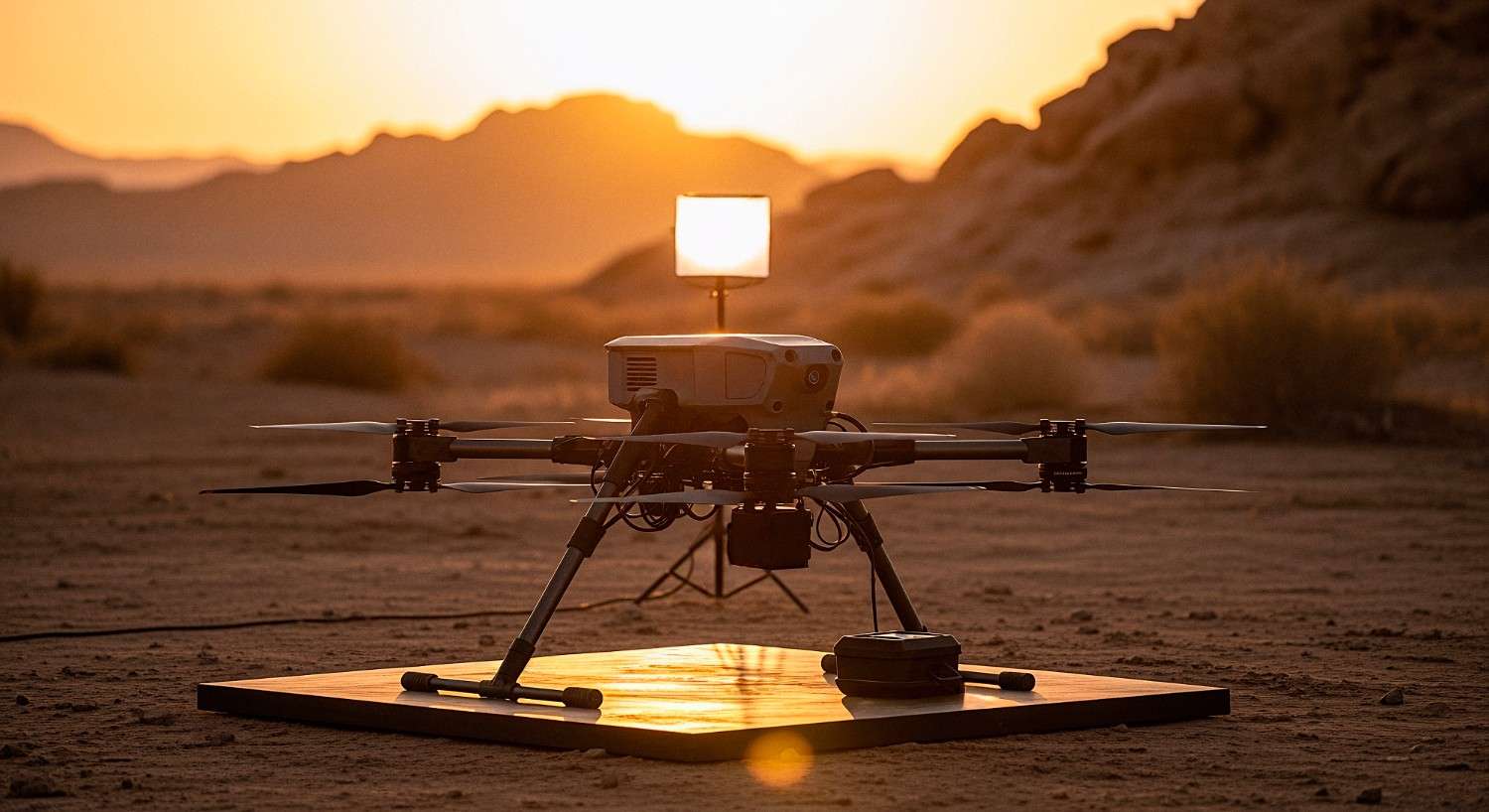
- Rapid Survey:In minutes, a single drone flight can take thousands of data points on a large site.
- Live linkages:The information of drones can be analyzed and distributed to stakeholders nearly in real-time.
- Quick decisions:Site managers do not have to wait until survey teams arrive; they can make quick decisions based on timely data at any moment in time.
- High-Resolution Image and 3D Modeling:Drones take pictures in thousands and create centimeter-accurate maps of their surroundings and 3D models.
- Proper Volumetric Measuring:When drone mapping services are used, the teams will be able to measure the stockpiles, track earthworks, and run analysis of cut-and-fill better.
- Reduced Human error:Automated data collection minimizes error, thus producing consistent and reliable results.
- Accelerated Processes:Automated mapping is time-saving and ensures projects are completed on time.
- Real-Time Progress Monitoring:Frequent flight of drones enables managers to monitor the progress of the work against design plans and identify the problems at the early stages.
- Safety of Operations:Drones work on hazardous sites, minimizing the risks on the site.
- Better Teamwork:The Drone mapping services deliver shareable maps and models that keep the stakeholders in line and updated.
- 1. UAVs are equipped with RTK/PPK GPS.
- 2. Manipulation software to apply to raw images and convert them to useful maps.
- 3. Visual and insights sharing platforms on cloud platforms to share across the stakeholders.
- Speed:Drones survey than 80 percent faster.
- Coverage:It is easy to map large or complicated sites.
- Safety:Employees evade dangerous places.
- Precision:Precise information minimises the error modes.
- Cost-efficiency:The reduction of labor and use of quicker timelines is economical.
- Track milestones of construction of the monitor.
- Pre-wall framing Track MEP rough-ins.
- Placement of a crane in a small city location.
- Work safely in the document underground and facade.
- BIM integration:Drone data may be directly integrated with BIM models to have a smooth design and planning.
- Intelligence through AI:Machine learning will be used to find defects, risks, or deviations automatically.
- Self-drones:Data collection and fully automated flight will make the process less dependent on manual operation.
The construction sector is experiencing significant transformation as modern technologies transform orthodox ways of doing things. The drone mapping in construction is one of the most effective innovations changing the way projects are surveyed, monitored, and controlled.
Drones equipped with cameras, LiDAR and GPS can help construction crews to gather detailed aerial data and transform it into precise 2D maps and 3D models fast.
Through the implementation of the drone mapping services, the construction professionals will have quicker insight, fewer risks, and their costs will be reduced besides enhancing the collaboration among the stakeholders.
This technology has become a critical asset to the contemporary construction companies that would like to increase the speed, accuracy and efficiency in all the stages of a project.
What is Drone Mapping in Construction?
Drone mapping in construction is a process that is applied using UAVs with high-resolution cameras, LiDAR sensors, and GPS to obtain detailed aerial data of the construction sites.
The information is then converted to 2D maps and 3D models, providing real-time information about the topography, progress, and conditions of a given site. The drone technology has been developed at a very fast pace and has thus become a cheap and viable alternative to construction teams aiming at streamlining their operations.
Drone Mapping vs Traditional Surveying
|
Feature |
Traditional Surveying |
Drone Mapping in Construction |
|
Speed |
Days or weeks for large sites |
Hours for the same area |
|
Accuracy |
Prone to human error |
Centimeter-level precision |
|
Safety |
Risky in hazardous areas |
No need for workers in risky zones |
|
Cost |
Higher labor & equipment costs |
More cost-effective long term |
|
Data Visualization |
Limited 2D maps |
2D, 3D, and digital twins |
Why Are Drone Mapping Services Essential for Modern Construction?
Along with the complexity of construction projects, the demand for reliable and accurate data has grown paramount. Conventional survey techniques usually require a huge labor force and consume a lot of time, which may cause project delays and may also create human errors.
The drone mapping services can get rid of most of these problems as they automate the data collection process, providing a more effective and cost-efficient means.
These are the main reasons why the construction industry has been swept by drone mapping.
1. Speed: Faster Data Collection and Project Monitoring
Time costs money in building, and time losses may cost companies millions. Conventional land surveys usually take days and even weeks to survey a large area, particularly in tricky terrains. Through the drones, however, a perfect mapping of entire sites can be done within a few hours.
Drone mapping in construction projects remains on schedule and minimizes expensive setbacks because of the speed at which data is gathered through drone mapping.
2. Enhanced Accuracy and Precision
Any small error in construction may result in time wastage and budgeting problems. Conventional surveying processes usually have difficulties with large sites and intricate measurements.
This is the place where drone mapping in the construction sector offers unparalleled accuracy, which means that projects operate well and efficiently.
Key advantages include:
3. Improved Efficiency and Productivity
In addition to accuracy, drone mapping in the construction sector increases speed, safety, and collaboration. Drones allow teams to concentrate on the most important things since they replace regular inspections and data collection.
The outcome is an increase in productivity, less risk, and increased teamwork at all levels of construction.
What Makes Drone Mapping Work?
The successful drone mapping must have three key ingredients at its core:
A combination of these aspects will create a single reality capture solution that will inform drone pilots, surveyors, and project managers with correct and useful information.
Advantages Over Traditional Surveying Methods
Comparing the traditional surveying with drone mapping in construction, the advantages are obvious:
This set of advantages is the reason why drones are rapidly becoming a common piece of modern construction.
Real-World Use Cases
DPR Construction incorporated the drone mapping services into its project workflow at the Halawa View Apartments project in Hawaii. They were assisted using weekly drone scans:
Gradually, drone mapping evolved to become an instrument of documentation and became part of logistics and orchestration. This led to more rapid decisions, the elimination of more surprises, and increased efficiency.
The Future of Drone Mapping in Construction
The drone mapping services have a bright future. With the development of drone technology, such aspects as intelligent image recognition, real-time analytics, and Building Information Modeling (BIM) integration will help drones become even more powerful.
Drones will likely become part of all construction projects, big and small, in the next few years, both residential and massive infrastructure projects.
Conclusion
Drones and the rise in drone mapping in construction are not merely a technological craze but a paradigm shift in the way the business is conducted. Drones are also enabling construction experts to plan better, work smarter, and deliver projects faster by offering an unparalleled speed, accuracy, and efficiency.
With the progressive implementation of drone mapping services by companies, the companies that embrace the innovation will have a competitive advantage in terms of cost reduction, safety, and the success of the project.
With the world where every minute counts and time is of the essence, drones are becoming the angels of development in the construction sector.
Read More: Main Reasons For Using A 3D Laser Scanner on Pipe Inspections