
- Laser emission:The scanner shines laser pulses on an object, usually in the shape of very short, high-speed pulses in the infrared spectrum that are not visible to the human eye.
- Reflection of pulse:As the pulses are emitted by lasers, they reflect to the scanner. The object surface features, including the color, the texture, and the reflectivity of the object, influence the rebound of the laser beam to the scanner.
- Time-of-flight measurement:The scanner indicates the duration of time that a pulse requires to travel through the device and the object. This period is then translated into metric measurements with the speed of light.
- Point cloud generation:The scanner determines a large set of data points on the surface of the object, referred to as a point cloud, by computing distances between various points on the surface. Every point is a 3D spatially located point.
- Processing of data:The point cloud is converted into an in-depth three-dimensional format or map that is a replica of the scanned environment. This data may be edited, analyzed, and used to create watertight 3D models.
- Reverse Engineering:When the design files are lost, convert Physical parts into CAD models. Crucial in the repetition of outdated parts.
- Quality Control:Compare the scanned parts and computer-aided designs to get real-time errors. This will bring increased accuracy and reduced defects.
- Adaptive Machining:Adaptive tool paths can be used to adjust tool paths dynamically through scanning, minimizing cycle times, and enhancing accuracy.
- Prototyping:This will help in speeding up design validation by producing digital prototypes in their exact forms to be tested.
- Custom Prosthetics and Orthotics:The anatomical fit of patient-specific devices is perfect. This enhances the comfort and convenience.
- Surgical Planning:Complex operations are planned using 3D scans of the anatomy of a patient, and this decreases the risk.
- Diagnostics:Monitor and treat a patient by tracking physical changes in the body of the patient over a period of time.
- Digital Preservation:Non-invasive scanning works out artifacts, monuments, and archaeological sites in high resolution as archives.
- Restoration & Replication:Pieces of artwork can be reproduced to be examined and put on display, keeping the originals secure.
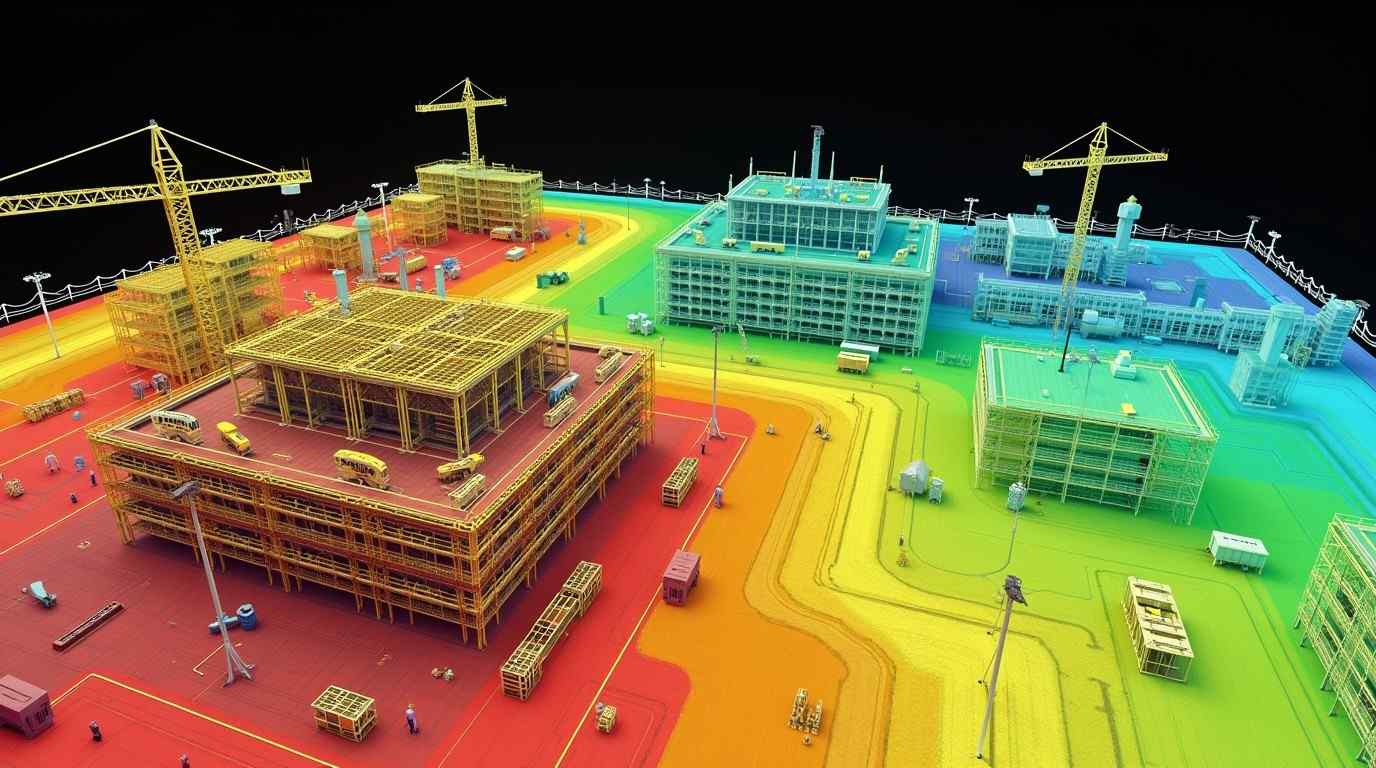
- As-Built Documentation:Create correct computer-based models of the existing buildings to aid in renovations and maintenance.
- Clash Detection:Scanning into BIM (Building Information Modeling) systems to determine clashes between the new and old structures.
- Progress Monitoring:Monitor the construction and track progress of projects accurately so that the projects are not behind schedule.
- Films and Games:Develop hyper-realistic virtual entities and settings of VFX and VR experiences.
- Avatar Creation:Scanning real-life objects or scanning actors to create realistic avatars to use in games and virtual worlds.
- Correctness:Records the correct details and dimensions, including complicated geometries.
- Speed:The speed gathers millions of data points in minutes, which saves time versus manual measurement.
- Non-Invasive:Scanning can be done, and there is no need to destroy delicate or precious items.
- Efficient cost:Reduces errors and corrections, conserves time and resources.
- Diversity:Is used in smaller, complex parts as well as significant buildings.
- 3D scanning drones will provide real-time information about the construction sites.
- Holographic scans can be used by surgeons as a way of providing precision treatments.
- Small businesses will find it easier to use cloud-connected portable scanners.
Technology has transformed the manner in which industries design, manufacture, and innovate drastically. The process of scanning the object and creating a digital version of it is one of the most revolutionary tools of recent years, and 3D scanning, as it captures the exact shape and dimensions of the object and converts it to digital form.
Seizing the middle ground between the real and the digital, the Power of 3D Scanning is opening new opportunities for performance, precision, and innovation in various fields.
We will take a closer look at the functionality of 3D scanning services, why they are becoming essential, and the broad range of applications that render this technology a game-changer.
What is 3D Scanning?
Making a physical object using a 3D scanner is a procedure that involves studying the object's shape, size, and even texture and color. A digital 3D model is then created using this information, which may be viewed, edited, and analyzed on a computer.
The Power of 3D Scanning compared with conventional measurement tools or 2D drawings is that the tool can note down intricate details, curves, and intricate geometries with more accuracy than any other tool. It can be a small object or a huge industrial building, and 3D scanning services will be able to create a digital copy of it.
How does laser 3d scanning work?
The principle of laser scanner functionality simplifies into pulse out (beam out) high-speed light, reflecting off objects, and back to the scanner sensor (LiDAR). The distance between the scanner and the object is computed by determining the difference between the sent and the received pulses for each pulse.
Applications of 3D Scanning Across Industries
The 3D scanning services are essential in various areas due to their multiple applications.
1. Manufacturing and Engineering
Advantage:Lowers expenses, accelerates the development process, and improves the accuracy of the products.
2. Healthcare and Medicine
Advantage:Enhances the comfort, safety, and treatment outcomes of the patients.
3. Cultural Heritage
Advantage:Preservation of history to research, restoration and education.
4. Architecture and Construction
Advantage:Enhances precision, lessens re 3 and enhances project schedules.
5. Entertainment and Arts
Advantage:Provides very experiential and creative experiences.
Benefits of 3D Scanning
It is not surprising that the demand of 3D scanning services increases as the benefits are quite numerous:
These benefits highlight the Power of 3D Scanning as a technology that can help to be more productive and quality-oriented in industries.
The Future of 3D Scanning
The Power of 3D Scanning is yet to be unleashed. The future opportunities are unlimited with the implementation of AI, IoT, and AR/VR technologies. For example:
The 3D scanning services are going to transform the industries, as more and more affordable and familiar technology becomes accessible.
Conclusion
The Power of 3D Scanning is reshaping the way industries design, manufacture, store, and make innovations. Whether it is tailor-made healthcare solutions or 3D manufacturing, digital conservation, and virtual entertainment, the 3D scanning services are establishing new standards in terms of accuracy, efficiency, and creativity.
A technology that allows artists to create a link between the real and the virtual, 3D scanning is not only a technology of the present, but it is the building block of the future.
Read More: The rise of drone mapping in construction: speed, accuracy and efficiency